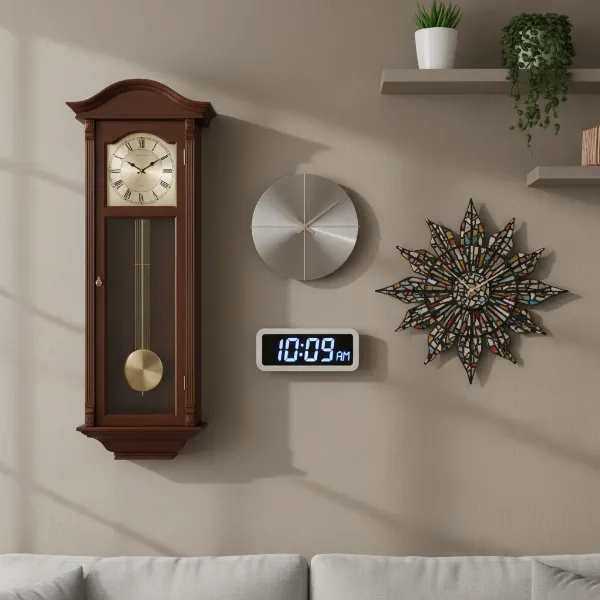
Choosing the perfect timepiece for your home involves more than just telling time; it’s about making a statement, enhancing your decor, and reflecting your personal style. Among the myriad options available, the classic elegance of a grandfather clock stands in stark contrast to the vast versatility of a wall clock. Each brings a unique presence and set of advantages to any living space, making the decision between them a thoughtful exercise in balancing tradition with modern living. This article delves into the distinct characteristics of both, helping you determine which clock truly “wins” for your specific needs and aesthetic preferences.
The Enduring Appeal of Grandfather Clocks
Grandfather clocks, with their commanding stature and intricate mechanical movements, have long been revered as more than just timekeepers—they are magnificent pieces of furniture, often passed down through generations. Typically standing between six and seven feet tall, these clocks feature a pendulum, weights, and a robust wooden enclosure that protects their sophisticated inner workings. Their rich history and distinctive chimes evoke a sense of heritage and timeless elegance that is hard to replicate.
The grandeur of a grandfather clock immediately establishes it as a focal point in any room. Its deep, resonant chimes, often heard every quarter-hour or on the hour, create an auditory experience that adds to the home’s ambiance. Many consider these clocks to be true heirlooms, appreciating not just their aesthetic beauty but also the craftsmanship and engineering behind their mechanical heart. This traditional aesthetic seamlessly integrates into classic or formal interiors, offering an imposing yet graceful presence. However, this imposing size demands significant floor space, limiting their suitability for smaller homes or rooms where space is at a premium. The mechanical nature also means regular winding and potential professional servicing, and their chimes operate day and night, which some may find disruptive.
The Versatility of Wall Clocks
In contrast, wall clocks offer an unparalleled range of styles, sizes, and functionalities, making them a highly adaptable choice for almost any interior design. From sleek, minimalist digital displays to ornate, antique-inspired pendulum models, wall clocks are designed to be mounted directly onto a wall, effectively saving precious floor space. This category encompasses everything from simple battery-operated quartz clocks to more complex mechanical versions, providing options for every taste and budget.
The primary advantage of a wall clock lies in its adaptability. It can serve as a subtle accent or a bold artistic statement, blending harmoniously with contemporary, industrial, farmhouse, or traditional decor. Modern wall clocks, often powered by highly accurate quartz movements, require minimal maintenance—usually just a periodic battery replacement. Many quartz models also boast silent operation, a significant benefit for bedrooms, offices, or any space where tranquility is paramount. While they may not possess the same grandiosity as a grandfather clock, their affordability and ease of installation make them a practical and stylish choice for enhancing a room’s functionality and visual appeal.
Key Factors in Your Decision
When weighing a wall clock against a grandfather clock, several critical factors come into play, influencing not only the initial purchase but also the long-term enjoyment and integration into your home. Each of these elements helps define the practical and aesthetic “fit” of your chosen timepiece.
Space & Placement
|
Our Picks for the Best Wall clock in 2026
As an Amazon Associate I earn from qualifying purchases.
|
||
| Num | Product | Action |
|---|---|---|
| 1 | AKCISOT Wall Clock, Modern Small Wall Clocks Battery Operated 8 Inch, Silent Non-Ticking Analog Classic for Office, Home, Bathroom, Kitchen, Bedroom, School(Black) |

|
| 2 | WallarGe 14.5'' Large Digital Wall Clock Battery Operated with Jumbo Numbers, Temperature and Date - Easy to Read and Set, Auto DST |
|
| 3 | HYLANDA Wall Clock, 9 Inch Silent Non Ticking Classic Battery Operated Clocks, Decorative for Living Room, Bedrooms, Bathroom, Kitchen Office (Bronze) |
|
| 4 | jomparis Wall Clock 12 Inch Non-Ticking Silent Battery Operated Round Wall Clock Modern Elegant Simple Style Clock for Home Office Kitchen Bedroom Living Room |
|
| 5 | AKCISOT Wall Clock 10 Inch Silent Non-Ticking Modern Clocks Battery Operated - Analog Small Classic for Office, Home, Bathroom, Kitchen, Bedroom, School, Living Room(Black) |
|
| 6 | Roymnie Wall Clock Silent Non-Ticking Modern Clock Battery Operated 8 Inch Small Classic Analog Decorative for Classroom, Living Room, Office, Bedroom, School, Hotel (Black) |
|
| 7 | Wall Clocks Battery Operated 8 inch Modern Wall Clock,Silent Non Ticking Wall Clock for Living Room Bedroom Kitchen Office Classroom Decor (Green White) |
|
| 8 | Bernhard Products Black Wall Clock Silent Non Ticking 10 Inch Quality Quartz Battery Operated Round Easy to Read Home/Office/Kitchen/Classroom/School Clock Sweep Movement |
|
| 9 | DAXSMY Wall Clock - 8 Inch Silent Non-Ticking Modern 3D Wall Clocks Battery Operated - Decorative Clock for Kitchen, Home Office, Bathroom, Bedroom(Rose Gold) |
|
| 10 | Roymnie Wall Clock Green, Silent Wall Clocks Battery Operated 8 Inch-Modern Non Ticking Analog Clock Decorative for Kitchen Office Bathroom Bedroom(Gold) |
|
The most immediate distinction lies in their physical footprint. A grandfather clock requires a designated area on the floor, typically in a spacious entryway, living room, or study where its height and depth won’t obstruct pathways. Its presence is undeniable and dictates the arrangement of surrounding furniture. Wall clocks, conversely, leverage vertical space, making them ideal for homes where floor area is limited. They can adorn any wall, from a compact kitchen to a sprawling living room, offering flexibility in placement without sacrificing precious real estate.
Aesthetic & Style
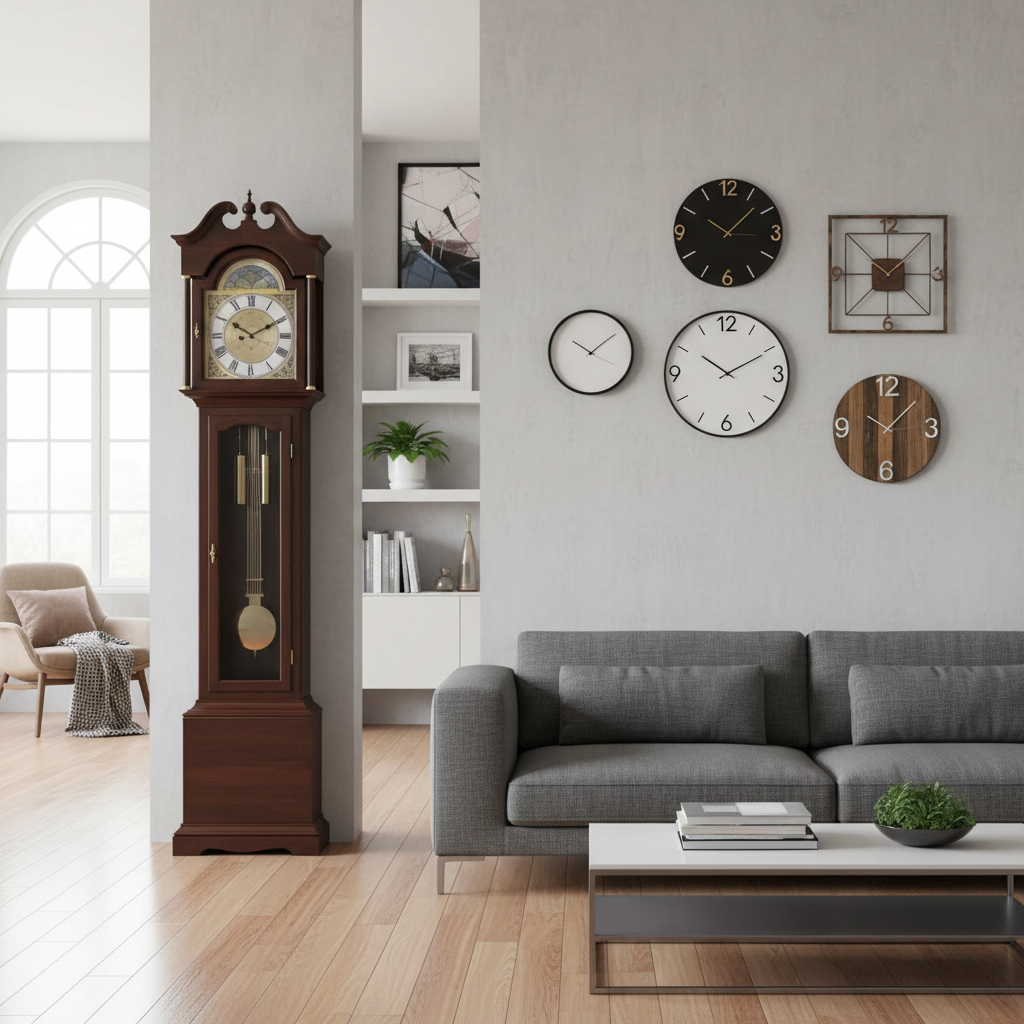
Grandfather clocks embody a classic, often elaborate, aesthetic that resonates with traditional and formal decor. Their dark wood casings, intricate carvings, and visible pendulums speak of historical charm and enduring craftsmanship. They create a focal point of old-world elegance. Wall clocks, however, present an almost limitless palette of design options. You can find them in sleek metal for a modern industrial look, distressed wood for rustic farmhouse appeal, vibrant colors for a pop art statement, or understated designs that blend seamlessly into any minimalist setting. Their versatility allows them to either complement existing decor or serve as a unique artistic centerpiece.
[image-1|classic-vs-modern-clocks|A classic grandfather clock contrasted with a modern minimalist wall clock, showcasing design diversity|
A split image showing on one side a grand, dark wood grandfather clock with intricate carvings, a visible pendulum, and Roman numerals in a formal, traditionally decorated living room. The other side displays a sleek, minimalist wall clock with a simple face and no numbers, made of brushed metal, hanging in a bright, contemporary living space with clean lines and modern furniture. Diffused natural light, editorial style.]
Budget
The investment required for a grandfather clock is generally substantial. These are often considered luxury items or significant heirlooms, reflecting the complexity of their mechanical movements, the quality of materials, and the craftsmanship involved. Prices can range from hundreds to thousands of dollars. Wall clocks, on the other hand, offer a much broader price spectrum. Simple quartz models are highly affordable, while designer or antique wall clocks can command higher prices. This accessibility makes wall clocks a more budget-friendly option for many homeowners.
Maintenance & Accuracy
Grandfather clocks, being mechanical, require regular maintenance. This includes winding the weights or chains, typically once a week, and occasionally needing professional servicing to clean and lubricate their intricate gears. Their accuracy can also be subtly affected by environmental factors like temperature and humidity, sometimes requiring minor adjustments to the pendulum. Modern wall clocks, especially those with quartz movements, are remarkably low maintenance. They rely on batteries that need replacement only once a year or so, and they are renowned for their exceptional accuracy, consistently keeping precise time with little to no intervention.
Sound
The signature deep chimes of a grandfather clock are a defining characteristic, offering a rich, resonant sound that marks the passage of time. While many appreciate this auditory tradition, the constant chiming, especially through the night, can be a consideration for some, particularly in smaller living spaces. Many modern wall clocks are designed for silent operation, using continuous sweep movements or simple quartz mechanisms that produce no audible ticking, making them ideal for bedrooms, studies, or quiet living areas where a peaceful environment is preferred.
Statement vs. Function
Ultimately, the choice often boils down to whether you seek a grand statement piece or a practical, versatile timekeeping device. A grandfather clock undeniably makes a bold statement, serving as a testament to historical craftsmanship and a symbol of enduring tradition. It is a piece that commands attention and conversation. A wall clock, while it can also be a significant design element, often prioritizes functional timekeeping and integration into the existing decor. It’s about blending utility with style, rather than solely dominating the space.
Detailed Comparison Table
| Feature | Grandfather Clock | Wall Clock |
|---|---|---|
| Size | Large, freestanding (6-7 ft tall) | Varied, wall-mounted (small to oversized) |
| Movement | Mechanical, pendulum, weights | Mostly quartz, some mechanical/pendulum |
| Aesthetics | Classic, traditional, imposing, heirloom | Modern, minimalist, traditional, artistic, versatile |
| Space Req. | Significant floor space | Minimal wall space |
| Maintenance | Regular winding, professional servicing | Battery replacement (quartz), occasional dusting |
| Accuracy | Can be sensitive to environment, requires adjustment | Highly accurate (quartz) |
| Sound | Deep chimes (hourly/quarterly), constant ticking | Silent (many quartz), some chimes/ticking |
| Price | High (investment piece) | Low to moderate (wide range) |
| Portability | Very low, difficult to move | High, easy to relocate |
| Installation | Place on level floor | Mount securely to wall |
Making Your Choice
Deciding between a wall clock and a grandfather clock comes down to a thoughtful assessment of your lifestyle, home environment, and personal inclinations. Start by evaluating the available space in your home. Do you have a corner or wall that can accommodate a tall, freestanding piece, or is wall-mounted decor a more practical solution? Next, consider your home’s existing aesthetic. If your decor leans towards classic, opulent, or heritage styles, a grandfather clock might be the perfect complement, anchoring the room with its dignified presence. For modern, eclectic, or evolving interiors, the sheer variety of wall clocks offers endless possibilities to match or refresh your design scheme.
Your budget is another significant consideration. Are you looking to make a substantial, long-term investment in a functional art piece, or do you prefer a more affordable, flexible decor item? Finally, reflect on your willingness for maintenance and your preference regarding sound. If you cherish the ritual of winding a clock and the symphony of chimes, a grandfather clock could be a source of daily pleasure. If low maintenance, silent operation, and precise timekeeping are paramount, a modern quartz wall clock will likely be your ideal choice.
Usage and Care Tips
Proper care ensures the longevity and optimal performance of any timepiece, whether it’s a centuries-old heirloom or a contemporary design.
For Grandfather Clocks, placement is key. Ensure it stands on a level, stable floor, away from direct sunlight, extreme temperatures, or high humidity, which can affect its delicate mechanical movement. Regular winding as per the manufacturer’s instructions is crucial. Consider having it professionally serviced every 5-10 years to clean, lubricate, and adjust its intricate mechanisms. When moving, always secure the pendulum and weights to prevent damage.
For Wall Clocks, secure mounting is paramount. Use appropriate hardware for your wall type to prevent accidental falls. For quartz models, use the specified battery type and replace it annually, even if the clock is still running, to prevent battery leakage that can damage the movement. Dust the clock face and frame regularly with a soft, dry cloth. If cleaning the glass, spray cleaner onto the cloth first, rather than directly onto the clock, to avoid liquid seeping into the mechanism.
Conclusion
The debate of wall clock versus grandfather clock isn’t about one being inherently “better” than the other; rather, it’s about identifying which timepiece best aligns with your home’s unique character and your individual preferences. A grandfather clock offers an unmatched sense of history, grandeur, and mechanical artistry, serving as a powerful statement piece and a potential family heirloom. Its presence speaks volumes of tradition and sophisticated taste. In contrast, a wall clock provides unparalleled versatility, affordability, and convenience, adapting effortlessly to diverse styles and spaces, making modern timekeeping both practical and aesthetically pleasing.
Ultimately, the choice comes down to whether you seek a commanding emblem of heritage that requires dedicated space and care, or a flexible, efficient, and stylish time-teller that harmonizes with your contemporary lifestyle. Which one will you choose to grace your walls or floors, and how will it define the rhythm of your home?
Câu Hỏi Thường Gặp
Are grandfather clocks still popular today?
Despite the rise of digital technology, grandfather clocks retain a significant following. Their popularity endures among those who appreciate classic aesthetics, fine craftsmanship, and the historical charm they bring to traditional or elegant home decor. They are often seen as cherished heirlooms and investments in timeless style.
How accurate are grandfather clocks compared to modern wall clocks?
Modern quartz wall clocks are generally more accurate, often losing or gaining only a few seconds per month. Traditional mechanical grandfather clocks, while capable of good accuracy, can be more sensitive to environmental changes like temperature and humidity, which can affect their pendulum’s swing. They typically require more frequent adjustment to maintain precision.
Can I hang a grandfather clock on the wall?
While traditional grandfather clocks are freestanding floor models, there are “grandfather wall clocks” or “grandmother wall clocks” which are smaller versions designed to be mounted on a wall. These hybrid designs offer the aesthetic of a grandfather clock in a more compact, wall-mounted format, combining classic looks with space-saving convenience.
What is the lifespan of a grandfather clock vs a wall clock?
With proper care and regular maintenance, a well-made mechanical grandfather clock can easily last for centuries, becoming a true heirloom. A high-quality quartz wall clock can also last for many decades, though its electronic components may eventually wear out. Simpler, less expensive wall clocks might have a shorter lifespan.
Do wall clocks make noise?
Many modern wall clocks, particularly those with quartz movements, are designed to be silent, featuring a continuous sweep second hand that eliminates ticking sounds. However, some wall clocks, especially those with mechanical movements or traditional step-second hands, will produce an audible ticking sound, and certain models may also include chimes.